
Engineering Solutions for Divergent Minds
Executive functioning coaching specializing in supporting individuals with ADHD, autism, and other executive functioning challenges as they pursue higher education and technical careers.
Stop Falling Behind
Many highly intelligent and highly capable people rely on talent until the workload becomes too much for their systems to handle. I help build the systems necessary to stabilize your performance so you can focus on your work instead of just trying to survive it.
Learn More
Let's Work Together
Ask a question or schedule a free consultation. Emails are answered within 1 business day.
Cara Mawson
I am a trained executive functioning coach with a B.S. in Physics and a Master’s in Engineering. My background includes over eight years of teaching and research focused on disability in STEM and academic motivation. I help design the systems that highly capable students and professionals need to move past the myth of laziness and practice their fields sustainably. Learn more about my journey here.

Executive Functioning Support for Twice Exceptional Students
Who I Work With
Students in technical fields that are being held back by their executive dysfunction.How I Help
1:1 sessions with support in between, systems that build independence, and coordination with their support team with consent.My Background
I completed rigorous supervised training as an executive functioning coach in 2022 after recovering from a concussion made my graduate research feel impossible.I’ve also spent the last decade teaching in inclusive classrooms, publishing research on academic motivation and the experiences of college students with disabilities, developing state-accredited professional development for educators, and leading communities of practice for educators and community volunteers interested in equity-based STEM education. Learn more about my journey here.Safety
The work done here is educational and not a substitute for therapy or behavioral healthcare. All information shared during sessions is confidential. Data is stored compliant with HIPAA and personal health information is de-identified.

The Process
Intake
I gather information on your student's academic history, start building an understanding of their experience, and establish goals for our partnership.Discovery
I work with your student to find their biggest friction points. We dive into their syllabi and assignments to understand the work ahead.Design
Once we've defined the problems and understand our goals, we begin designing a sustainable workflow so your student doesn't have to fall behind again.Implementation
We implement, we iterate, we optimize.

Resources
Finch
Self Care and Habit Building
Anki
Flashcards Optimized for How the Brain Learns
Forest
Grow Trees While You Work
Study With Me
Aesthetic Pomodoro Timer
5 Minute Parent's Guide to Executive Dysfunction in Engineering
Executive Functioning Support for Your Clients
Who I Work With
4th Grade - College students that are being held back by their executive dysfunction, perfectionism, and chronic overwhelm. I specialize in supporting students interested in STEM and project intensive majors.My Background
I trained as an executive functioning coach in 2022 after a concussion made my graduate research feel impossible. I’ve also spent the last decade teaching in inclusive classrooms, publishing research on academic motivation and the experiences of college students with disabilities, developing state-accredited professional development for educators, and leading communities of practice for educators and community volunteers interested in equity-based STEM education. Learn more about my journey and research here.How I Help
1:1 sessions with support in between, systems that build independence, and coordination with their support team with consent. Focus areas include task initiation, time and energy management, perfectionism and procrastination, flexibility, and persistence.Safety
The work done here is educational and not a substitute for therapy or behavioral healthcare. All information shared during sessions is confidential. Data is stored compliant with HIPAA and personal health information is de-identified.
About Me

Research Background
I started my career doing research in biophysics and planetary science and pivoted to experiential engineering education and disability studies during graduate school. I researched academic motivation as well as the experiences of students with non-apparent disabilities navigating engineering education.Equitable STEM Education
My background includes teaching in inclusive classrooms, designing STEM curriculum, and training STEM educators. I created state-accredited professional development for educators and the Community Gamechangers program for Pittsburgh and Baltimore community educators through the NSF Rec2Tech grant.Executive Functioning Coaching
I completed rigorous supervised training as an executive functioning coach after recovering from a concussion that caused me to drop out of graduate school early in my career. As a coach, my work is solutions-oriented, practical, and empowering.Member of the ADHD Coaches Organization (ACO)
Selected Publications
Mawson, C., Riley, D., Malino, H., Jamison, C. (In Press). Exploring the Engineering Classroom Experiences of Students with Non-Apparent Disabilities. ASEE 2025 Annual Conference and Exhibition.Jackson, A., Mawson, C., & Bodnar, C. A. (2022). Faculty Motivation for Pursuit of Entrepreneurial Mindset Professional Development. Entrepreneurship Education and Pedagogy, 5(3), 320-346.Mawson, C., Bodnar, C.A., Streiner, S. (2021). Investigating Potential Gender Differences in First-Year Engineering Students’ Academic Motivation and Homework Submission Behavior. ASEE 2021 Annual Conference and Exhibition.
Executive Functioning Support for Twice Exceptional Students

Who I Work With
Students 4th Grade - College and young professionals in technical fields that are being held back by their executive dysfunction.How I Help
1:1 sessions with support in between, systems that build independence, and coordination with their support team with consent. Read more about my process here.Safety
The work done here is educational and not a substitute for therapy or behavioral healthcare. All information shared during sessions is confidential. Data is stored compliant with HIPAA and personal health information is de-identified.
The Process
Intake
I gather information on your student's academic history, start building an understanding of their experience, and establish goals for our partnership.Discovery
I work with your student to find their biggest friction points. We dive into their syllabi and assignments to understand the work ahead.Design
Once we've defined the problems and understand our goals, we begin designing a sustainable workflow so your student doesn't have to fall behind again.Implementation
We implement, we iterate, we optimize.
How to Use This Blog
Welcome! This page contains lots of information and tips for STEM students navigating ADHD and other conditions that cause executive dysfunction. I've included headers to make it easier to skim, but this is a lot of text. I have created a basic Gem in Gemini based on this material if that's what you need instead. I cannot see your conversations with this Gem in any way.Please note that this Gem is not set up for coaching but to guide you into finding the right strategies for your situation.
Self Talk as a Tool for Navigating ADHD and Executive Dysfunction
Fall 2026
In this blog I want to talk about self talk as a tool for maximizing the return on investment for all the time we spend learning how to navigate ADHD and executive dysfunction.
What Self Talk Really Is
Self talk is not only the way that we talk to ourselves, but also the standard habits and procedures of our thinking. We all engage in self talk constantly, every day, all the time. It's not always words that can be put into a sentence. Sometimes self talk can be a feeling that we're sitting in, which is just as intrusive as negative self talk.
Where the Gap Comes From
Our self talk develops over time as we grow and learn and start to develop our identity. For many people in STEM, their high school self talk develops as a result of being successful without a massive amount of effort and studying. Then, when faced with the workload and unstructured nature of pursuing an engineering degree, that self talk is no longer aligned with reality. The gap tends to fill with a curiosity-laden shame. "Why can't I get started?" "Why is my brain so broken?" "How am I supposed to get this done on time?"
We Rarely Question Our Own Thoughts
Very few of us, especially in the engineering and STEM world, are engaging in constant self monitoring. From experience, it seems that most of us naturally accept our thoughts as semi objective pieces of data from our brain. We don't often take an analytical lens to our own thoughts in the same way we would a journal article. We don't stop to think about the true sources of these thoughts.

The Weight of Negative Feedback
Research shows that students with ADHD, across their lifetime, receive a beyond statistically significant amount of negative comments about their behavior and performance. Most of the time these students don't have a full understanding of what they're doing wrong and how to be better.And they're hearing these negative comments from parents, coaches, teachers, the exact people you would expect to be supporting the student with a learning difference, who are often holding that student to unrealistic standards.
Rejection Sensitive Dysphoria
As children into young adults, we trust those older and more experienced than us to give us an understanding of how we are functioning in the world. But there's another important element to be understood here. Those with ADHD tend to experience what's called rejection sensitive dysphoria. Rejection sensitive dysphoria is an internal experience of an interpersonal interaction.It's been described as emotional sunburn, with high intensity, and the experience being somewhat unavoidable after the rejection happens. So not only are those with ADHD picking up on the negative reactions and attitudes of the adults around them, they then internalize the negativity in a severe manner.
How the Pathways Get Reinforced
Over time, the negative self talk pathways in our brain get reinforced. Even if we recognize the negativity in the moment, the self talk pathway is so ingrained in our brain that we feel like we deserve the negative self talk. We become somebody that identifies with our executive dysfunction as part of our identity. This experience causes stress and actually feeds the executive dysfunction. Over the years, people doing this train their brains to be more stressed and more critical.There is a chance that your brain has accidentally characterized heavy negative self talk as an integral part of your process for success, meaning you may have trained your brain that success only comes through negativity towards yourself. It's important to shift the mindset that your previous successes came as a result of negative self talk, instead celebrating your accomplishments despite experiencing that negative self talk.
Retraining the Pathways
Over time we can retrain the pathways in our brain to take neutral and positive pathways rather than the negative pathways that have been building for years. As with most activities that we haven't built the brain pathways for, this can feel really awkward. It's good to experiment with what feels the least awkward to you, and move towards even more positive pathways as you become accustomed to it.Try these the next time you're finding it challenging to sit down and work."It's okay to not feel motivated."
"I trust myself to get started."
"This is an opportunity to improve."Eventually the simple act of positive thinking can lead to a naturally more positive mood in the long run. This method helps manage stress and also helps build a sense of self trust and acceptance of where we're at. Over time, directing your self talk cuts down on the stressful emotional experiences that can add up together to become a wall of awful.
What Changed for Me
After years of practicing this method, I almost never experience fear that an item on my to do list won't be accomplished. Even on my absolute worst days, I'm usually working by 10am. Rather than put myself through shame until the sun went down, I wasn't experiencing the anxious thoughts that made the work feel painful. Self talk is a long term investment that almost sneaks up on you in how effective it is.
Tips for Surviving STEM with ADHD
Summer 2026
Most engineers with ADHD or executive dysfunction believe that they are amazing under pressure. Sometimes this is enough that students convince themselves that doing two weeks of work in one night before it's due is like their special power, their secret sauce.The problem with this method is that it just doesn't feel good when you're actually in it. You're stressed the whole night, you were probably stressed the whole two weeks before, and when you turn it in there's probably at least one part that you're not really sure of or you're not really proud of. The work that you're turning in after these nights where diamonds are made under pressure isn't often the work that you want to be represented by.
It's a Marathon, Not a Sprint
We continue to engage in these patterns because they have worked for us so far. The work produced during these nights could be technically sound, elegantly designed, and functional in the best ways. You probably got an A on one of these assignments, if not several.However, you're still looking for ways to improve your work, as evidenced by you being here. The truth is that anybody studying engineering needs some sort of support, because the marathon that is engineering education is taxing, no matter how well you can use a planner naturally.


Getting Ahead as an Engineering Student with Executive Dysfunction
You have a gigantic assignment to do. Maybe your professor assigns 100 homework problems that are due the day of the exam, and because they aren't checking week to week, you now have 100 problems to do before your exam in two days. Or perhaps it's the background section of a lab report where you have to gather research and write the proper citations. All of this is happening for one class while your other classes, clubs, research, and responsibilities are still in full swing.
A Basic Stress Reduction Plan
To get ahead of this, at the start of the semester, when your large homework assignments are assigned, you can do the math and set up a schedule for yourself to complete 20% of the problems in 20% of the class's total sessions. You can set larger benchmarks depending on how many times you think that you'll need to sit down to finish a task. My default is to schedule 3 sittings and assume that one won't be that productive, and then I add more as needed. I recommend setting up this schedule in Google Sheets or your favorite project management tool.Each of the 20% blocks will be its own task and can be scheduled to pop up on your to do list at the appropriate time during the semester. If you are able to sit down and plan out your semester in this way, it may be helpful for you to share your deadlines with a friend or peer and ask them to set their own calendar reminder to check in with you about your goals.
It's Always a Good Time to Get Started
So what are the potential problems in reaching the 20% goals throughout the semester? The biggest one I hear as an executive functioning coach is that motivation only spikes at the end of the semester, when it's crunch time. Some people feel as though they have to wait for the right motivation to begin a task.For those with ADHD and other conditions that slow executive functioning down, I hesitate to lean on motivation as a tool to inspire action, because motivation is a feeling, and feelings are temporary. We've all experienced moments where we needed motivation, waited for it, maybe actively looked for it, and it was nowhere to be found.
The Motivation Problem
The desire for motivation is a natural one, but motivation itself is not reliable. Motivation cannot be practiced in the same way other skills can be practiced. Discipline can be practiced, so wherever possible, it can be helpful to shift a desire for motivation to a desire for discipline. Unlike motivation, the discipline that you practice will come with you to the next big assignment and the next big project.Now let's talk about how to get started in the face of overwhelm, so that you can practice your discipline.

Dealing with Overwhelm When Overloaded
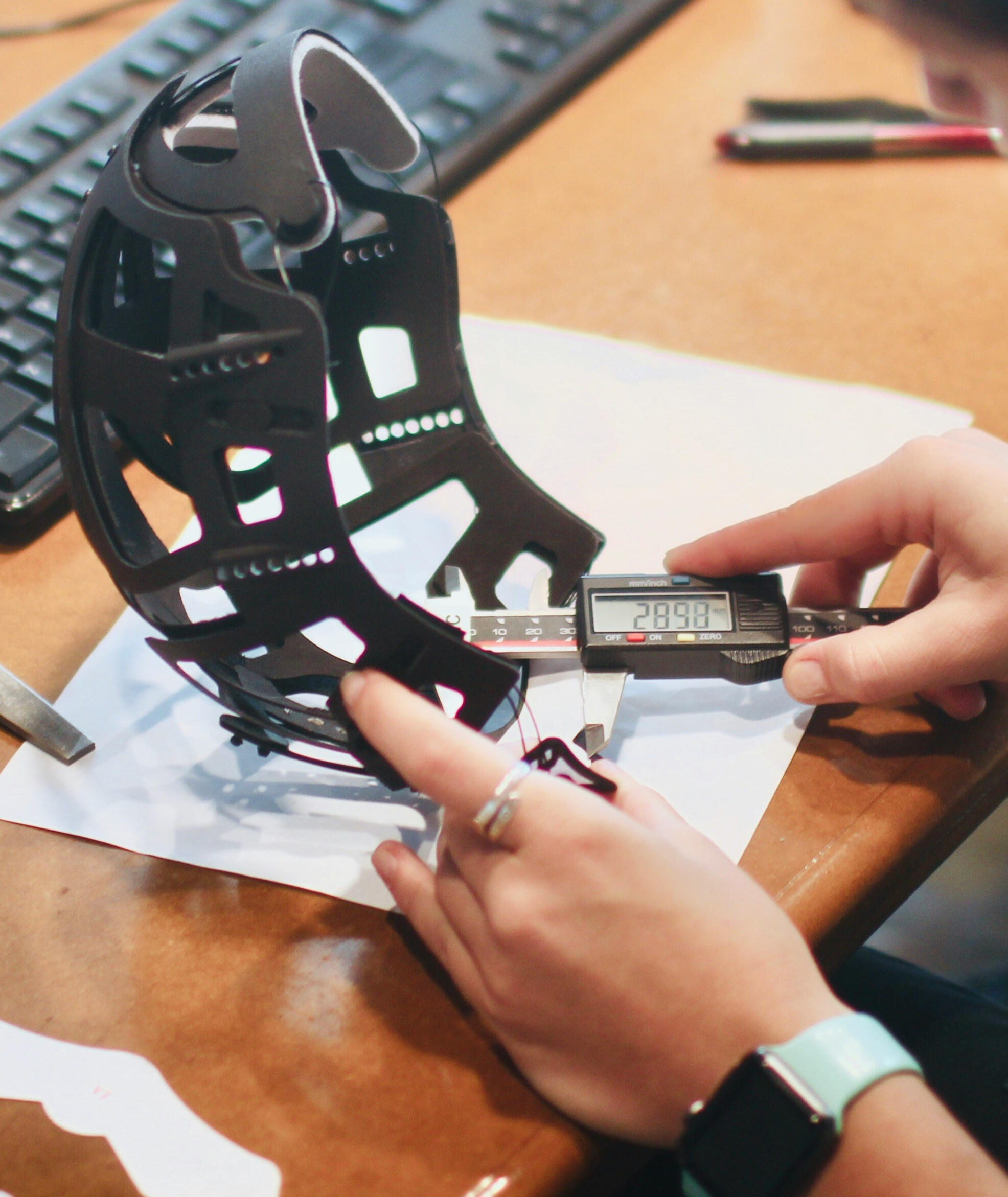
Overwhelm is completely natural in the world of studying engineering and STEM, where you are learning how to solve some of the most difficult problems at the same time as you're learning how to become an adult. In the face of overwhelm, we often fail to activate the same problem solving muscle memory for our own day to day challenges.The process of learning to succeed with ADHD and executive dysfunction is a lot like solving problems in physics and engineering. It involves building a deep understanding of what's happening and how it's happening, a deep understanding of the non-negotiables, experimenting with different solutions, collecting data and iterating on your systems, and having a clear, sometimes flexible, metric of success.
One Person's Tool is Another Person's Terror
Something to know about ADHD and conditions that cause executive dysfunction is that everybody experiencing these conditions is still unique in their struggles. A planner may help one student with ADHD because that student's specific executive function struggles are in planning and visualizing their week. Another student who tries to use a planner may not be able to remember to use their planner, rendering it useless and potentially a source of shame.Then there is the student who can remember the planner, is fully capable of using it to plan a productive week, and maybe even does so, but after the beautiful plan is laid out, they crash. Often this reason is what ADHD experts refer to as the wall of awful. It's the all encompassing, crushing feeling that your to do list is much too big for you to handle. In my experience, it's almost as if, before you've even started, you feel the sum total of all the shame you would feel if you missed every single deadline on your to-do list. It's going to feel different for everybody, based on what you struggle with.
Finding the Right Solution
Back to solutions. Depending on the severity of your problem with getting started and tackling complex and heavy workloads, one important part of the solution is to figure out why you are getting overwhelmed. This is a good spot for both introspection and working through things with a mental health care professional.Beyond that, the work you do at home to find solutions is going to be a series of experiments and an exercise in trying to view yourself from the point of view of a neutral observer. Some people choose to lean on an executive functioning coach during this time to help the process move faster and more efficiently, and to have a sense of accountability without adding to overwhelm.
Coaching Yourself Through It
The general process without a coach can be summed up like this.Identify a challenge. Your first challenge may be something small, which can give you a lot of momentum. Eventually you'll want to tackle the challenges that are taking up the most brain space, or causing you to lose the most energy. Then you'll have more energy to dedicate to both your daily tasks and to building the systems that will allow you to succeed.Experiment with a solution. Tons and tons of resources are available online for navigating ADHD challenges. I've noticed that the key to a good executive functioning solution is often that it goes against a small, unwritten rule that we've set for ourselves that we may not even know is there. For example, I keep floss picks at my desk, next to my bed, and next to my couch to encourage myself to floss. There is a phone charger in every room of my house, just in case I forget to charge my phone.Evaluate your solution. Some solutions are easy wins, and some we never even try once before we write them off. For solutions that didn't work, we have to decide whether to make a small change and move forward, or pivot entirely into a new solution. One of the most important things here is to resist the urge to call a null result a failure. Similar to science, we have to treat every outcome as data and keep moving forward.Repeat. Once your solution becomes second nature and stops requiring energy, you can put that energy towards overcoming the next challenge.It may seem very simple, but in practice, this is how people manage to succeed and thrive, and break out of the cycle of waiting until the very last minute. Your journey to better self management is made up of a thousand tiny experiments.
Tip: Try Getting Started Slower
Getting started on anything can be incredibly overwhelming. But what if it was already started for you? Would it be easier for you to study if somebody set up your desk for you, found the right chapters in the textbook, laid out the problems you have to complete, and maybe even copied the problems onto your homework papers for you, so that all you had to do was solve one specific problem in front of you?If the answer is yes, then you may need to get started slower. It is often helpful for people who struggle with task initiation to complete the first micro step of their task as its own unique event. In the face of overwhelm, the small action of getting out a textbook can be its own isolated win. Take a short break, and then come back to open the textbook to the correct chapter. Try not to judge yourself in these moments, and know that eventually you'll find that the two minute task you set out to accomplish has become 15 minutes of productive work.
Frequently Asked Questions
Pulled from the article
How do I stop procrastinating on engineering homework with ADHD?Rather than waiting for motivation, which is a feeling and therefore temporary, it helps to shift toward building discipline, which can be practiced and carries over from one assignment to the next. Getting ahead of a big assignment, like 100 homework problems due the day of an exam, by breaking it into small scheduled blocks, and getting started slower by treating the first micro step as its own win, are two ways to work with this instead of against it.What is the wall of awful in engineering?The wall of awful is the all encompassing, crushing feeling that your to do list is much too big for you to handle, often showing up before you've even started as the sum total of the shame you'd feel if you missed every deadline on your list. For engineering students, this can show up around big assignments like a semester long project or the background section of a lab report, on top of classes, clubs, research, and other responsibilities still in full swing.How can engineering students plan ahead for a huge assignment with ADHD?At the start of the semester, when large homework assignments are assigned, you can do the math and set up a schedule to complete 20% of the problems in 20% of the class's total sessions, using something like Google Sheets or a project management tool, with each block scheduled to pop up on your to do list at the right time. It can also help to share your deadlines with a friend or peer and ask them to check in with you about your goals.

Engineering Solutions for Divergent Minds
Let's Work Together
Or ask a question:
Cara Mawson
I am a trained executive functioning coach with a B.S. in Physics and a Master’s in Engineering. My background includes over eight years of teaching and research focused on disability in STEM and academic motivation. I help design the systems that highly capable students and professionals need to move past the myth of laziness and practice their fields sustainably. Learn more about my journey here.

Rates
Rates range from $80 to $200 per hour depending on services provided. Multiple session packages are available.Consultations are always free and typically last 30 minutes.
Sessions
Each 60 minute session is student centered, solutions focused, and designed to build long term independence.Structure:
Weekly check-ins and accountability
Build and refine personalized systems
Learn executive functioning skills
Build independence
Leave with a clear plan
Engineering Solutions for Divergent Minds aims to serve the STEM community by making executive functioning support accessible. A limited number of reduced-rate spots are available based on financial need. Please ask about current availability. In addition, I am connected to a network of ADHD informed professionals and may be able to help refer you to the proper support based on your needs.